[This was an attempt at "postmodern" writing for a class a couple years ago. I do not recall just how well it was received, but it made fun writing.]
There was once an Emperor in a distant land who loved new things. New foods, new clothes, new television programs, new sports. He loved new things so much that he taxed the people mercilessly in order to fund his passions and accumulated outrageous dept on the international market.
Now the Emperor’s greed for new things had the curious result of causing jealousy of others’ possessions. Thus, the Emperor took steps to own all that was new in his kingdom, even if it meant stealing via dodgy court proceedings. In one instance, he stole an experimental olive grove owned by a wealthy merchant, thereby sending the honest man into bankruptcy while posting bail. Another time, the Emperor’s eye fell upon the beautiful wife of his own superintendent, so the Emperor had the honest man offed and took in the grief-stricken widow.
But theft at home was not enough, so the Emperor also tried his hand at cheating the international market. He pulled off several daring heists that gained him rich fisheries formerly owned by a distant ally, and the grain fields of his neighbors eventually came into his possession. Everyone knew who was responsible for the losses. But they dared not anger the Emperor, for he was a powerful monarch.
It happened that a rich ambassador came to the Emperor’s palace one day, who was from a land even farther away from the cheated ally. This country was very rich and very powerful and was exporter of the very best satellite TVs on the market. The Emperor was delighted to see the ambassador and entertained him lavishly with a wonderful feast of experimental olives and delicious fish on organic grain bread, and entertained him via conversation with his beautiful new wife, all in the hopes of opening a trade deal. But when the time came for negotiations, the ambassador only smiled and replied that his country was not interested in trade, but had sent him to discuss the Emperor’s human rights abuses. Enraged, the Emperor had the ambassador imprisoned, beaten, and held ransom for the price of two-dozen high-definition plasma-screen TVs, with accompanying entertainment systems. The distant country’s President only frowned and shook his head, offering the Emperor three chances to free his ambassador, while passing an embargo on all televisions to that kingdom. When the Emperor demanded an HDTV for the third time, the President declared a police action, despite international calls for peace talks.
The Emperor became worried. While he was powerful enough in his own country, the distant land with its HDTVs and its President was more powerful by far. The Emperor hastily called a draft and sent a delegation to his ally, requesting aid. Yet even with drafted soldiers and allied help, the Emperor knew that the war would be bloody.
Suddenly, two young men appeared in the Emperor’s court. They were famous inventors and arms dealers, and promised to build for the Emperor a new weapon unlike anything the enemy could produce. Intrigued, the Emperor inquired as to what they had in mind.
“Only lend us all your tanks and missiles and airplanes,” responded the elder of the two, “and we will build you a weapon unlike anything on Earth!”
The Emperor was pleased with the offer – a weapon unlike any on Earth, and new! – so he called his generals and advisors and ordered them to provide the young men with all the military resources in the kingdom. The inventors took the weapons and tanks into a tremendous warehouse and closed the doors to begin work.
A week passed and nothing was produced. The powerful far away country was mobilizing its armies. The Emperor became worried, so he sent his chiefs of staff to check on the progress of the new weapon. They returned smiling, saying that the work was splendid and was coming along nicely. Pleased, the Emperor waited.
Two weeks passed and the distant country was shipping out its soldiers on great boats as the soldiers’ wives and children waved goodbye with patriotic flags in their hands and patriotic songs upon their lips. Nothing had been heard from the warehouse so the worried Emperor sent his chamberlain to see what was keeping the inventors. The chamberlain returned smiling, saying that progress was being made and that the new weapon was looking splendid, not to worry. Nervously, the Emperor waited.
Three weeks passed with no word from the warehouse, while the forces of the distant country landed their ships near the kingdom’s borders. Terrified and frustrated, the Emperor demanded to know what was keeping the inventors and marched down to the warehouse himself to see the new weapon. The inventors smiled when they saw their patron approaching and bowed low, bidding him enter. And what did the Emperor see once his eyes grew accustomed to the dim light?
Nothing.
There was nothing at all in the warehouse; the tables were clean, the shelves were swept, and the floor completely bare. Alarmed, the Emperor demanded to know where was his new weapon – and to were the old ones had got to, for that matter – but the elder inventor took him gently by the shoulder with a perplexed look and said, gesturing up in to the empty space of the warehouse, “This is your weapon.”
The Emperor was himself very perplexed but the inventors strutted and scurried about, stepping carefully so as not to trip upon imaginary ropes and cables. They explained how the weapon’s various parts worked, the rationale behind design features, and proudly called attention to certain aesthetic details that they had included for personal fulfillment. The Emperor was by now extremely concerned, but when he looked to his generals and cabinet members, they all crossed their arms and nodded soberly and congratulated the inventors on a job superbly done. Though a little disturbed, the Emperor became convinced that he was simply being too narrow-minded and old fashioned to see the magnificent and sophisticated creation so he joined in the stern adulation and ordered the weapon to the warfront immediately.
The next day, after all necessary preparations had been made, the Emperor went with his royal retinue to the warehouse to fetch the new weapon. The streets were thronged with the citizen of the kingdom, as the king had issued a royal decree, commanding that a grand parade would see off the new weapon to the battlefield. As the Emperor was preparing to march from the warehouse, the imaginary weapon affixed to a tremendous flatbed trailer to be pulled by the only remaining army vehicle, the younger inventor approached him.
“Take this,” he said, and produced an official looking box with a matching key. “When you are ready to use the weapon, open this box, but no sooner.”
The Emperor thanked the young man gravely and tucked the little box under his arm.
Outside, the imperial jeep was waiting and the emperor stepped sedately up and sat up straight in the back seat, where all the people could see him and the glittering medals and badges attached to his uniform as he drove in front of the army procession. At the Emperor’s signal the jeep pulled out of the warehouse and the vehicle with the flatbed in tow heaved into motion behind. The crowds cheered wildly as the Emperor emerged but fell silent when they saw the empty flatbed, loaded only with loose ropes arranged as though they were holding something. No one dared to speak as the jeep and flatbed rumbled by, until a little boy who knew no better pointed at the pile of ropes and said, “Why, there is nothing in the trailer!” At once the crowd began to murmur and the Emperor grew very nervous indeed, but he persevered until the jeep left the city gates. None too soon, for the dust clouds of the approaching enemy were gathering on the horizon. With an uncomfortable lump in his stomach, the Emperor fumbled with the key and unlocked the box, ready to unleash all the horrors of his imperial might upon the foe. But inside were nothing but a note and a pile of receipts for the purchase of tanks, missiles, and airplanes from the Emperor’s cheated neighbors. The note read, “For our honest fathers,” and it was signed by the inventors with this postscript: “Your ally wishes you the very best of luck.”
Thursday, October 27, 2011

Wednesday, August 31, 2011
The Cursory History of the Science Fiction Universe, Part One
So let’s see if the four years of academic training have benefited me, as I strive to unlock the true history of the Universe!
 As best I can tell, sometime after the Beginning, the Deep Ones had a falling out an one of their number, Cthulhu, came to earth to claim it as his own. Unfortunately, the stars were not right, so Cthulhu sunk his city-tomb to wait out the eons. Around this time his cousin Dagon also came to earth and settled in the sea.
Some time after this, the Forerunners arrived, populating the galaxy from some unknown place of origin. They loved Earth above all their possessions, and when the Flood came along, made plans to allow the humans to inherit their vast knowledge. It was a good thought, since the Flood proved too much for the orderly Forerunners, who disappeared into their shield worlds and touched off the Halo rings, exterminating the Flood.

Though future investigations turned up nothing, in fact the Forerunners had discovered a way to break through the barriers of space and time, stumbling into another dimension in the distant future. There, bereft of their technology, they set up a tribal existence so basic that the Imperium of Man, just arriving to explore the region, dismissed the newcomers as an indigenous species. In time the Forerunners, rediscovering their discarded technology, rose up to create a new empire, calling themselves the Tau and attributing their technological leap to their faith in “the Greater Good.” Unfortunately, the Forerunners/Tau had been followed by their Flood adversaries, who had fallen into the new reality at a different place and time. Mutating and reforming, the new Flood fleets descended upon the galaxy with new forms that were termed by the Imperium, “Tyranids.”
Meanwhile, back on Earth, the reseeding of the Human race went well and three principal races had formed: the Atlantians, the Lemurians, and the Picts. But at the start of the Hyborian Age a cataclysm shook the world and the first two empires collapsed, the survivors spreading out to form sundry new nations of Hyrkanians, Hyborians, Picts, and the tribes of the south. It was during this time that the Deeps Ones began to creep back into memory, for a legend grew that either in that age or the one previous, the followers of Bokrug the water lizard, the forgotten lords of Ib, had overthrown the city of Sarnath beside their acrid lake. Lost cities and temples dedicated to grotesque gods were occasionally discovered in pools and forests or hidden in the distant horizons, and in the tiny realm of Khauran, a great toad-like monstrosity called Thaug was installed by the witch Salome as a voracious puppet-deity. Thaug was perhaps the most visible of these dark religions, for he met his end when an invading army of Zuagirs, under the command of a Cimmerian named Conan, stormed the temple on behalf of a deposed queen. In time, the Picts came to rule the known world under their brutish king, Gorm.
Further cataclysms brought an end to the Hyborian Age and reshaped the landscape. This most destructive event also had the curious side effect of spinning off multiple realities, one of which would come to play host to the Forerunners/Tau and the Flood/Tyranids.
As for Earth, the nations of the world realigned themselves and history progressed largely as we have always believed. In the north of the Americas, a great nation called Lomar rose up to rival that of the Inca and Aztec and Maya, but fell with its capital city, Olathoë, to a wild tribe called the Inutos, later “Esquimaux,” who left no trace of the proud civilization. By the 19th Century, the enduring tales of Cthulhu were dismissed as the ravings of madmen, though a sailor claimed to have stumbled upon the alien’s city-tomb and encountered the nightmarish beast in person. The claim remains unverified.

All materials are not mine, but are collected from the fictions of H.P. Lovecraft, Robert E. Howard, Games-Workshop Ltd, and Bungie Studios
 As best I can tell, sometime after the Beginning, the Deep Ones had a falling out an one of their number, Cthulhu, came to earth to claim it as his own. Unfortunately, the stars were not right, so Cthulhu sunk his city-tomb to wait out the eons. Around this time his cousin Dagon also came to earth and settled in the sea.
Some time after this, the Forerunners arrived, populating the galaxy from some unknown place of origin. They loved Earth above all their possessions, and when the Flood came along, made plans to allow the humans to inherit their vast knowledge. It was a good thought, since the Flood proved too much for the orderly Forerunners, who disappeared into their shield worlds and touched off the Halo rings, exterminating the Flood.

Though future investigations turned up nothing, in fact the Forerunners had discovered a way to break through the barriers of space and time, stumbling into another dimension in the distant future.
 There, bereft of their technology, they set up a tribal existence so basic that the Imperium of Man, just arriving to explore the region, dismissed the newcomers as an indigenous species. In time the Forerunners, rediscovering their discarded technology, rose up to create a new empire, calling themselves the Tau and attributing their technological leap to their faith in “the Greater Good.” Unfortunately, the Forerunners/Tau had been followed by their Flood adversaries, who had fallen into the new reality at a different place and time. Mutating and reforming, the new Flood fleets descended upon the galaxy with new forms that were termed by the Imperium, “Tyranids.”
Meanwhile, back on Earth, the reseeding of the Human race went well and three principal races had formed: the Atlantians, the Lemurians, and the Picts. But at the start of the Hyborian Age a cataclysm shook the world and the first two empires collapsed, the survivors spreading out to form sundry new nations of Hyrkanians, Hyborians, Picts, and the tribes of the south. It was during this time that the Deeps Ones began to creep back into memory, for a legend grew that either in that age or the one previous, the followers of Bokrug the water lizard, the forgotten lords of Ib, had overthrown the city of Sarnath beside their acrid lake.
 Lost cities and temples dedicated to grotesque gods were occasionally discovered in pools and forests or hidden in the distant horizons, and in the tiny realm of Khauran, a great toad-like monstrosity called Thaug was installed by the witch Salome as a voracious puppet-deity. Thaug was perhaps the most visible of these dark religions, for he met his end when an invading army of Zuagirs, under the command of a Cimmerian named Conan, stormed the temple on behalf of a deposed queen. In time, the Picts came to rule the known world under their brutish king, Gorm.
Further cataclysms brought an end to the Hyborian Age and reshaped the landscape. This most destructive event also had the curious side effect of spinning off multiple realities, one of which would come to play host to the Forerunners/Tau and the Flood/Tyranids.
As for Earth, the nations of the world realigned themselves and history progressed largely as we have always believed. In the north of the Americas, a great nation called Lomar rose up to rival that of the Inca and Aztec and Maya, but fell with its capital city, Olathoë, to a wild tribe called the Inutos, later “Esquimaux,” who left no trace of the proud civilization. By the 19th Century, the enduring tales of Cthulhu were dismissed as the ravings of madmen, though a sailor claimed to have stumbled upon the alien’s city-tomb and encountered the nightmarish beast in person. The claim remains unverified.
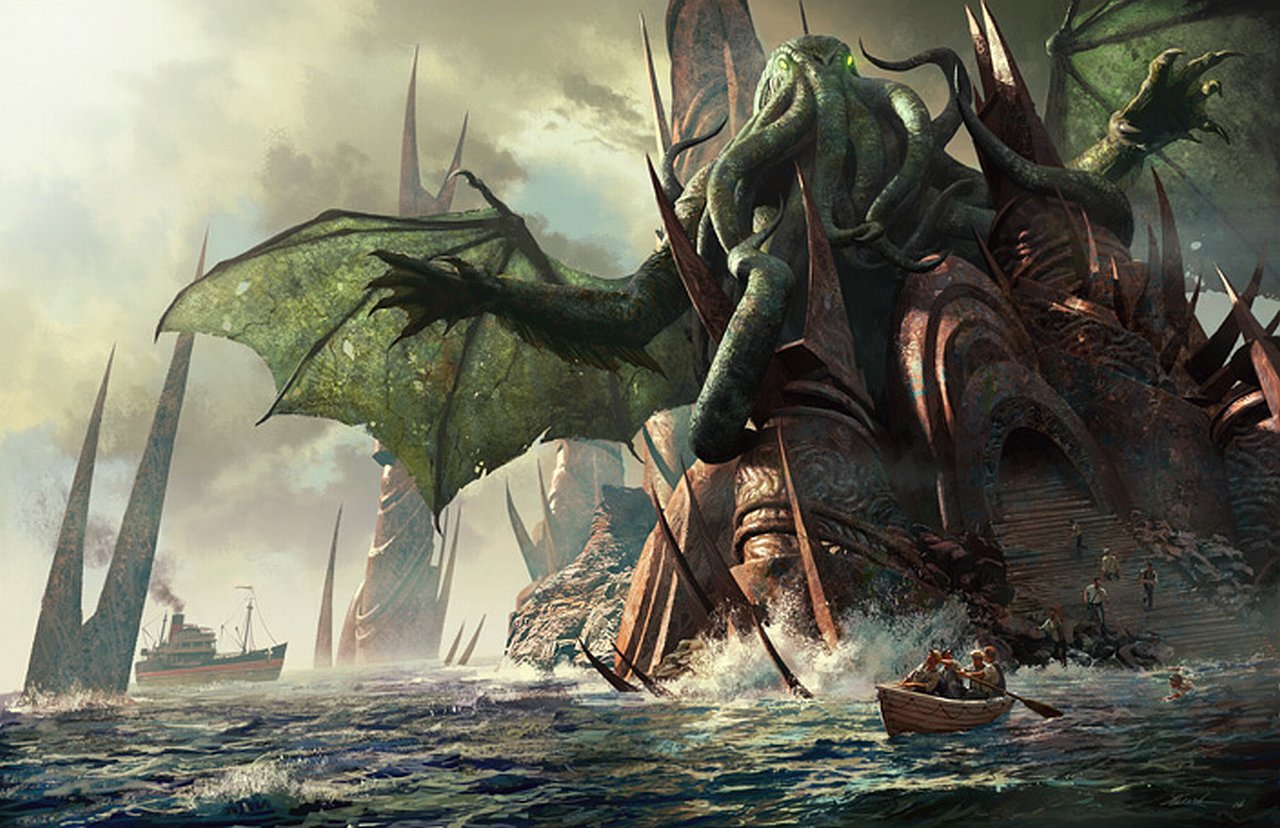
All materials are not mine, but are collected from the fictions of H.P. Lovecraft, Robert E. Howard, Games-Workshop Ltd, and Bungie Studios
Tuesday, August 9, 2011
Witness Works - 2 - Rather Lost

This is inspired by a true story. My sister and I really did get ditched in Flash when our bus driver had specifically agreed to let us off in Upper Hulme, Derbyshire.
Saturday, July 16, 2011
Witness Works - 1

While going through some old notebooks I realized that I have left a great many characters floating aimlessly without a story to call home. So I've set up this comic to give them just that. While I will try to make clear when I am using a "guest character" from someone else's work, most of the figures here will be my own...or that's the plan!
Sunday, March 7, 2010
Pokemon and Clothes
Someone posed a question today: why do some Pokemon wear clothes? I think we're addressing a biological/environmental/social concept here.
Some Pokemon's genetic material produces structures that may appear artificial but are simply a natural element (consider the markings on butterflies). Other Pokemon are conditioned by necessity to improve themselves through the adaptation of items found in their environment, while still others, either out of social acceptance or mere personal interest, acquire accouterments not natural to their person.
Biological example: perhaps the Meowth's and Persian's forehead "jewelry" is analogous to the pearls discovered in clams.
Blastoise is a great example for environmental conditioning, as that particular species has discovered that cylindrical human refuse (pipes, tennis ball canisters, old potato cannons) is a superior conductor of the water ducts that occur naturally beneath the carapace.
As for social expectations, consider that prolonged exposure to humans has impressed upon the Machamp and Jinx the virtues of modesty, while the combat minded Primape discovered the advantages of training with weighted cuffs. Kadabra and Alakazam benefit from natural intelligence combined with remarkable psychic powers, and perhaps at some point in the past their ancestors discovered that the Spoon is a universally recognized icon representative of their abilities.
Some Pokemon's genetic material produces structures that may appear artificial but are simply a natural element (consider the markings on butterflies). Other Pokemon are conditioned by necessity to improve themselves through the adaptation of items found in their environment, while still others, either out of social acceptance or mere personal interest, acquire accouterments not natural to their person.
Biological example: perhaps the Meowth's and Persian's forehead "jewelry" is analogous to the pearls discovered in clams.
Blastoise is a great example for environmental conditioning, as that particular species has discovered that cylindrical human refuse (pipes, tennis ball canisters, old potato cannons) is a superior conductor of the water ducts that occur naturally beneath the carapace.
As for social expectations, consider that prolonged exposure to humans has impressed upon the Machamp and Jinx the virtues of modesty, while the combat minded Primape discovered the advantages of training with weighted cuffs. Kadabra and Alakazam benefit from natural intelligence combined with remarkable psychic powers, and perhaps at some point in the past their ancestors discovered that the Spoon is a universally recognized icon representative of their abilities.
Wednesday, December 2, 2009
A Homemade Christmas
I’ll wrap up my blogging this semester in the spirit of Christmas. Before the times when my sister and I could expect video games and cameras on Christmas morn, our family was experiencing hard times. Dad was experimenting with different managerial jobs around the country after his premature retirement from the Air Force during the Reagan/Clinton draw down of the early-Nineties. Job-hopping eventually landed us back at my mom’s parents’ where we stayed for two fantastic years.
Apparently finances must have been tighter than usual, because my sister and I were accustomed to the usual Wal-Mart Christmas: Hasbro and Mattel toys and fresh clothes, rather than hand-me-downs. But one Christmas was to be different. Mom took us aside and informed us that there would be no Wal-Mart this time around. Instead we would be getting something special, but not bought with money. We were probably skeptical – at least, I don’t remember feeling terribly reassured – but we were at that age where it is better to be outside and in the woods than inside playing Gameboy, so we accepted her explanation and set about getting excited for Jesus’ birthday.
When Christmas came around, it was better than we could have guessed. I do not recall what my sister received, but I was equipped with an entire armory of wooden weapons. In the heyday of raising children, Grandpa had mastered the manufacture of wooden guns from plywood, where the outline was traced with pencil and a jigsaw used to cut out the toy. Once free it could be sanded around the edges to prevent splintering. This technique he passed on to my dad that Christmas and the two of them spent hours fashioning swords, shields, and riffles enough to arm the entire household. The swords were fashioned in the style of the blades from the cover-art of my Narnia books – to which I was addicted – and I recognized them immediately. The shields were crafted with real leather grips heavy-duty stapled to the wood – I was heartbroken when the leather gave out, rendering one shield useless – and the rifle had a real military strap attached to the barrel and the stock, so that I could sling it across my back. But the pies de resistance was a PVC canon, complete with wheeled cart for easy field maneuvers. I was overjoyed, and spent the rest of my middle school years armed to the teeth and superior to any imaginary beast that thought to oppose me.
It was also at that time that I was developing my model craze. I had started with model trains, and somewhere had come into possession of a full track and train set. But I lacked terrain so Dad created papier-mâché mountains over chicken wire, with tunnels cut through the center, just like in the magazines. After my initial jaunt through the woods that left the wilds behind the house piled with the corpses of unfortunate goblins, I returned to become to railroad tycoon and ran freight for the entire afternoon.
To this day I’ve still got the best presents ever. It may not be often that I venture forth to do battle or to maneuver the iron horse through the Sierra Nevada, but my gifts are faithful, awaiting my eventual return.
Apparently finances must have been tighter than usual, because my sister and I were accustomed to the usual Wal-Mart Christmas: Hasbro and Mattel toys and fresh clothes, rather than hand-me-downs. But one Christmas was to be different. Mom took us aside and informed us that there would be no Wal-Mart this time around. Instead we would be getting something special, but not bought with money. We were probably skeptical – at least, I don’t remember feeling terribly reassured – but we were at that age where it is better to be outside and in the woods than inside playing Gameboy, so we accepted her explanation and set about getting excited for Jesus’ birthday.
When Christmas came around, it was better than we could have guessed. I do not recall what my sister received, but I was equipped with an entire armory of wooden weapons. In the heyday of raising children, Grandpa had mastered the manufacture of wooden guns from plywood, where the outline was traced with pencil and a jigsaw used to cut out the toy. Once free it could be sanded around the edges to prevent splintering. This technique he passed on to my dad that Christmas and the two of them spent hours fashioning swords, shields, and riffles enough to arm the entire household. The swords were fashioned in the style of the blades from the cover-art of my Narnia books – to which I was addicted – and I recognized them immediately. The shields were crafted with real leather grips heavy-duty stapled to the wood – I was heartbroken when the leather gave out, rendering one shield useless – and the rifle had a real military strap attached to the barrel and the stock, so that I could sling it across my back. But the pies de resistance was a PVC canon, complete with wheeled cart for easy field maneuvers. I was overjoyed, and spent the rest of my middle school years armed to the teeth and superior to any imaginary beast that thought to oppose me.
It was also at that time that I was developing my model craze. I had started with model trains, and somewhere had come into possession of a full track and train set. But I lacked terrain so Dad created papier-mâché mountains over chicken wire, with tunnels cut through the center, just like in the magazines. After my initial jaunt through the woods that left the wilds behind the house piled with the corpses of unfortunate goblins, I returned to become to railroad tycoon and ran freight for the entire afternoon.
To this day I’ve still got the best presents ever. It may not be often that I venture forth to do battle or to maneuver the iron horse through the Sierra Nevada, but my gifts are faithful, awaiting my eventual return.
Mom Woke Me Up
The first time I ever beheld forked lightning was in my mom’s arms as we looked out our dining room windows. She had woken me up from my four-year-old slumber to watch the lights show because she was not going to have me grow up afraid of thunder.
As we stood looking out – well, she was standing, I was sitting comfortably on her hip – a branch of spectacular light shot across the little German town near Dad’s Air Force Bases and spread its fingers through a boiling cloud as easily as a hand into whipped foam. I was astounded, having only seen such a thing in pictures.
Mom’s propensity for waking us in the name of experiencing spectacular phenomenon has gone on to this day. With one eye on the weather, Mom would make plans to witness God’s wonders as a family, wrapping up in blankets on a cold August night to watch meteors, or turning out all the lights and stepping out on the porch to identify the constellations on a clear night. Though tired and sometimes irritable, we rarely complained, but put on a happy face, intent on enjoying whatever she had in store for us.
It was always worthwhile. Lawn chairs were a favorite practice. These we’d set up in the driveway in a neat row while the dogs looked on from their little houses in mellow confusion and we’d pull up the hoods on our sweaters and blankets tight about our shoulder and wait. If it was a meteor shower, then we’d eventually start pointing out each sighting, our necks craning this way and that as we strove to see what another already had – too late. Then a duo would streak south and the lucky viewer would calmly point out the place where they had just gone and maybe someone else would agree, having caught the same pair in time. An hour or two would be spent thus, until none had spotted a falling star in some time, then we’d all give a mild cheer, as though for fireworks, a happy cheer as well as a thankful one, as though congratulating the speeding comets on a flight well carried out and thanking them for the privilege of playing witness.
Or if it was constellations, we might bring out paper or a book with us to hold in one hand while the other gripped at the blankets, and we’d search the sky, imagining that we were sailors, or ancient architects, or traveling Wisemen seeking guidance. At last we would have counted all the most recognizable signs available that season and we would congratulate one another before offering up a laudatory prayer to God, thanking him for granting us the privilege of seeing such great things.
As we stood looking out – well, she was standing, I was sitting comfortably on her hip – a branch of spectacular light shot across the little German town near Dad’s Air Force Bases and spread its fingers through a boiling cloud as easily as a hand into whipped foam. I was astounded, having only seen such a thing in pictures.
Mom’s propensity for waking us in the name of experiencing spectacular phenomenon has gone on to this day. With one eye on the weather, Mom would make plans to witness God’s wonders as a family, wrapping up in blankets on a cold August night to watch meteors, or turning out all the lights and stepping out on the porch to identify the constellations on a clear night. Though tired and sometimes irritable, we rarely complained, but put on a happy face, intent on enjoying whatever she had in store for us.
It was always worthwhile. Lawn chairs were a favorite practice. These we’d set up in the driveway in a neat row while the dogs looked on from their little houses in mellow confusion and we’d pull up the hoods on our sweaters and blankets tight about our shoulder and wait. If it was a meteor shower, then we’d eventually start pointing out each sighting, our necks craning this way and that as we strove to see what another already had – too late. Then a duo would streak south and the lucky viewer would calmly point out the place where they had just gone and maybe someone else would agree, having caught the same pair in time. An hour or two would be spent thus, until none had spotted a falling star in some time, then we’d all give a mild cheer, as though for fireworks, a happy cheer as well as a thankful one, as though congratulating the speeding comets on a flight well carried out and thanking them for the privilege of playing witness.
Or if it was constellations, we might bring out paper or a book with us to hold in one hand while the other gripped at the blankets, and we’d search the sky, imagining that we were sailors, or ancient architects, or traveling Wisemen seeking guidance. At last we would have counted all the most recognizable signs available that season and we would congratulate one another before offering up a laudatory prayer to God, thanking him for granting us the privilege of seeing such great things.
Subscribe to:
Posts (Atom)